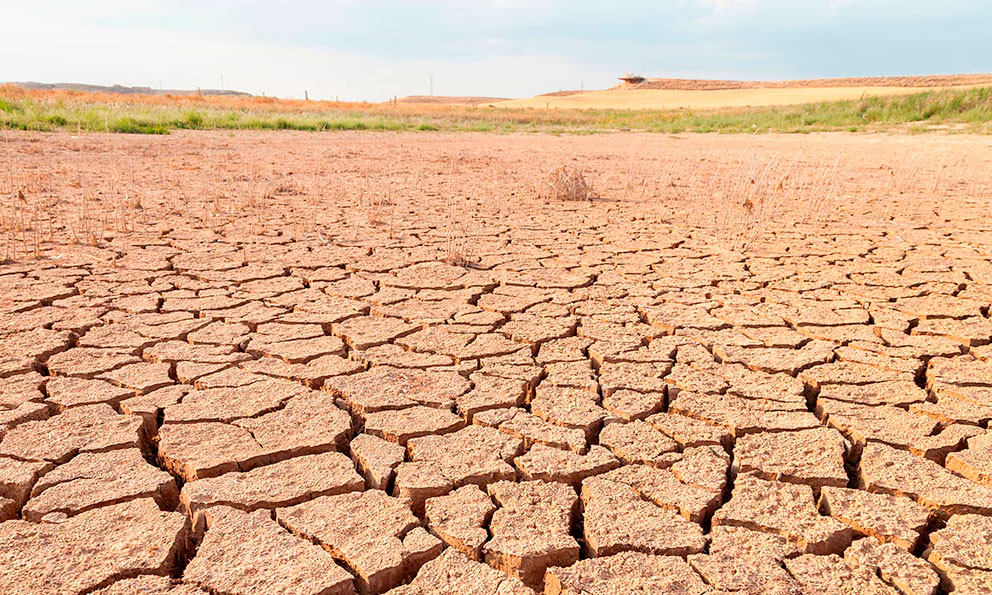
For the first time in more than nine years, and for the second consecutive time, San Luis Potosí is completely drought-free throughout its entire territory. This improvement in weather conditions has been possible thanks to a particularly generous rainy season during the first half of July, marked by phenomena such as Hurricane Flossie, whose influence was decisive in reducing areas with water deficits in several regions of the country.
According to the most recent report from the Mexico Drought Monitor—issued on July 20 by the National Meteorological Service (SMN) and the National Water Commission (Conagua)—above-average rainfall was recorded in areas of the north, northwest, center, northern Pacific, and southern parts of the country. This atypical rainfall pattern has allowed states like San Luis Potosí to experience a significant improvement in their water conditions.
At the beginning of the month, ten municipalities in San Luis Potosí were still experiencing moderate drought conditions: Armadillo de los Infante, Cerro de San Pedro, Ciudad Fernández, Rioverde (the capital of San Luis Potosí), San Nicolás Tolentino, Santa María del Río, Soledad de Graciano Sánchez, Tierra Nueva, and Zaragoza. However, all of them were removed from the affected list within weeks, allowing the state to completely eliminate drought indicators for the first time in 2025.
This climate relief is not an isolated event. In 2024, the state also recorded a drought-free period during September, although it was emerging from a critical period between September 2023 and June 2024, when large areas of the state faced extreme and exceptional drought conditions. Going back further, from May 2015 to August 2024, San Luis Potosí experienced persistent drought, with only a brief respite in March-April 2015.

Nationally, the report indicates that 17.7% of the country still faces drought conditions—ranging from moderate to exceptional—representing a decrease of 4.1 percentage points compared to the end of June. Currently, only ten states in the country, including San Luis Potosí, have managed to completely escape this phenomenon.
This new scenario represents an opportunity to rethink water management strategies and the use of natural resources in the face of an increasingly unpredictable climate.
Source: planoinformativo